Home Repair Business Website: Services That Win Work
How can your home & repair business prosper from great and modern website design, you will find out going through this Inkyy blog article.
 6 min read

A home repair business website is the first thing most customers see of your company. Before they call, they check what you do, where you work and whether people like you. If the site is slow, vague or out of date, they go to the next result.
This guide explains which website services help a home repair or home improvement business most: web design, development, SEO, branding and, where it makes sense, an app. It also gives a checklist and tips for choosing a provider.
Why your home repair business needs a good website
Starting a home improvement or repair business is relatively easy, which means competition is local and close. Customers choose between a handful of companies on the first page of search results. They compare photos, reviews, prices and how professional each business seems.
First impressions form fast, and design plays a large part in them. A clear, modern site tells people you are organised and reliable. A cluttered or broken one suggests the same about your work. Good web design, in other words, is part of your reputation.
The good news is that you do not need a huge site. A focused website with the right information, built well and kept current, can compete with larger firms in your area, because local customers care most about trust, proximity and availability.
What a home repair business website needs
- A clear list of services. Plumbing, roofing, painting, flooring, handyman jobs: say exactly what you cover.
- Service area. List the towns and districts you work in.
- Photos of real work. Before-and-after images show quality better than any slogan.
- Reviews and credentials. Customer comments, insurance, guarantees and trade memberships.
- Easy contact. A tap-to-call number, a short quote form and clear opening hours.
- Fast mobile pages. Many customers search on their phone while standing in the damaged room.
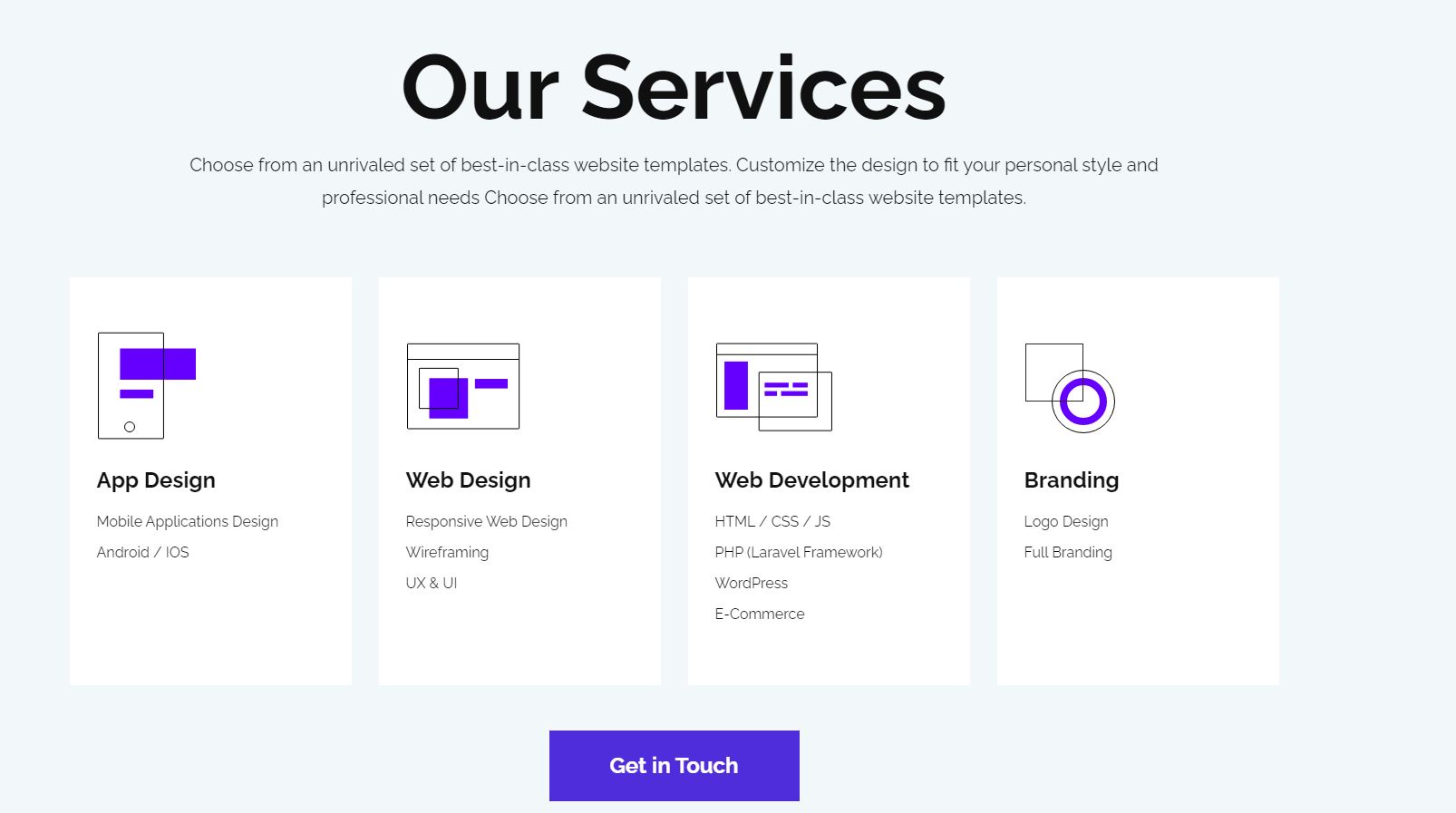
The services layout above uses short labels, one icon per service and a single button. Use the same approach to present your repair services without overloading the page.
Website services that help a home repair business
Web design
Design is how visitors judge you in seconds. A professionally designed website keeps visitors reading and encourages them to contact you. Three elements matter most for a repair business:
- Responsive design. The layout adapts to phones, tablets and desktops, so every visitor sees a version that suits their screen. Without it, many people will leave.
- Wireframing. UX designers plan the structure of each page with simple diagrams before the visual design. It shows where the headline, services, proof and call to action sit.
- UI and UX. User interface (UI) covers the buttons, menus and visual controls. User experience (UX) covers how it feels to use the site: can a customer find the phone number, understand the services and send a request without effort?
Our web design principles and 5 rules of web design explain the thinking behind these, and typography tips help with readable text.
Web development
Design is how the site looks; development is how it works. Developers turn the approved design into a working site using HTML, CSS and JavaScript, often on WordPress, and add features such as contact forms, booking and online payments. Good development also affects speed, security and how easily you can edit the site yourself.
Search engine optimisation (SEO)
SEO is the process of making your site easy for search engines to understand, so it appears when people search for your services. For a home repair business, the benefits are practical:
- More visibility. You can appear for searches like “roof repair” or “kitchen fitter” plus your town, reaching people who have not heard of you.
- More qualified enquiries. Someone searching for a service is already looking to hire, unlike someone who sees a radio ad.
- Long-term value. Good pages and reviews keep working without paying for every click.
Start with a complete Google Business Profile, service pages with local wording and customer reviews. Google’s local ranking page explains the factors. More tips are in our web design tips for SEO.
Branding and logo design
Your brand is more than a logo, but a clear logo helps customers recognise and remember you on vans, uniforms and quotes. A simple mark, one or two brand colours and a consistent typeface make a small business look established. Full branding extends this to tone of voice, imagery and the customer experience, so people connect with the business as well as the name.
App design, if you need it
Most home repair businesses do not need a mobile app. A fast mobile website does the job. An app can make sense for a larger company, such as a booking service with many customers. In that case, designers should follow the platform guidelines, Material Design for Android and the Human Interface Guidelines for iOS, and involve developers early to spot technical limits.
Home repair website checklist
- Your main services and area are clear on the first screen.
- The phone number is tappable and repeated on every page.
- Each major service has its own page.
- Photos, reviews and credentials are visible.
- The site looks good and loads quickly on a phone.
- Contact forms work and are monitored.
- Titles and headings use the services and towns customers search for.
- Your Google Business Profile matches the website.
- You can see visits and enquiries in analytics.
If you already have a site that is not producing enquiries, our website redesign steps show how to decide what to change. Other trades face the same challenges: see web design for tradesmen, service business websites and small business web design.
Choosing a provider
Ask any web design provider to show similar projects, explain who writes the content, say what happens after launch and give a written quote with what is included. A good provider should be able to explain the choices in plain language and make the site easy for you to update. Our guide on how to choose a web design agency lists more questions to ask.
Frequently asked questions
What should a home repair business website include?
Clear services, your service area, photos of completed work, reviews, credentials and an easy way to contact you. A quote form and a tappable phone number are the most useful features.
Do I need SEO for a home repair business?
Yes, because most customers search before they hire. Local SEO, meaning a complete Google Business Profile, service pages and reviews, helps you appear when people search for repairs in your area.
How much does a website cost for a home repair business?
It depends on the size of the site and how much is custom. A simple site built on a proven structure costs less than a fully custom design with booking or online payments. Ask for a written quote that lists what is included.
Does a home repair business need a logo?
A logo is not essential on day one, but a simple, consistent one helps customers recognise you on your vehicle, uniform, invoices and website. It can be part of a short branding package.
Need a home repair website for a client?
Inkyy is a white label design and development team for agencies. We design, build and brand websites for home repair and home improvement companies that you deliver under your own brand. See our design services, explore our development services or book a 15-minute call.