HVAC Website Design: 4 Ways to Get More Service Calls
If you are an owner of an HVAC Business you are at the right place. Follow these 3 tips for better online visibility of your HVAC Business, and with Inkyy's help, nothing is impossible.
 1 min read
HVAC website design decides whether a homeowner with a broken boiler or air conditioner calls you or the company that appears next to you in the search results. Many heating and cooling firms grow by word of mouth, but recommendations alone rarely fill a diary. A website that is easy to find, clear and fast turns searches into service calls.
This guide gives four practical ways to get more calls through your website: local SEO, a clear first impression, useful content and paid search. It ends with a launch checklist and answers to common questions.
Why HVAC website design matters
Heating and cooling are not optional. When a unit fails, people want a fast fix and they search on their phone. They tend to call the first company that looks local, reliable and available. Seasonal peaks make this sharper: in a heatwave or cold snap everyone searches at once, and the businesses with clear, quick sites win the calls.
That is why HVAC website design is about more than looks. Every decision, from the headline to the button colour, should help a worried person trust you and get in touch within seconds.
1. Make your HVAC website easy to find
Search engine optimisation (SEO) is the work that helps your pages appear for the phrases customers use. For a local HVAC firm, focus on local results first.
- Claim and complete your Google Business Profile. Add your services, hours, service area, photos and phone number. Google ranks local results by relevance, distance and prominence, as described on its local ranking page.
- Write one page for each service. Furnace repair, AC installation, maintenance plans and emergency callouts each deserve their own page with the town name in the title and headings.
- Keep your details consistent. Name, address and phone number should match across your website, Google listing and directories.
- Ask for reviews. Reviews build trust and help your prominence in local results. Reply to them politely.
Our web design tips for SEO explain how design choices affect rankings.
2. Make a clear first impression
When someone lands on your site they should understand within a few seconds what you do and how to reach you. That means putting the key message on the first screen, not buried below a large photo.
- A clear headline. State the service and area, for example “Heating and air conditioning repair in Leeds”.
- A large phone number. On mobile it must be a tap-to-call link.
- One obvious button. “Book a service” or “Get a free quote” should stand out from everything else.
- Trust signals near the top. Reviews, certifications and years in business reassure people who are letting you into their home.
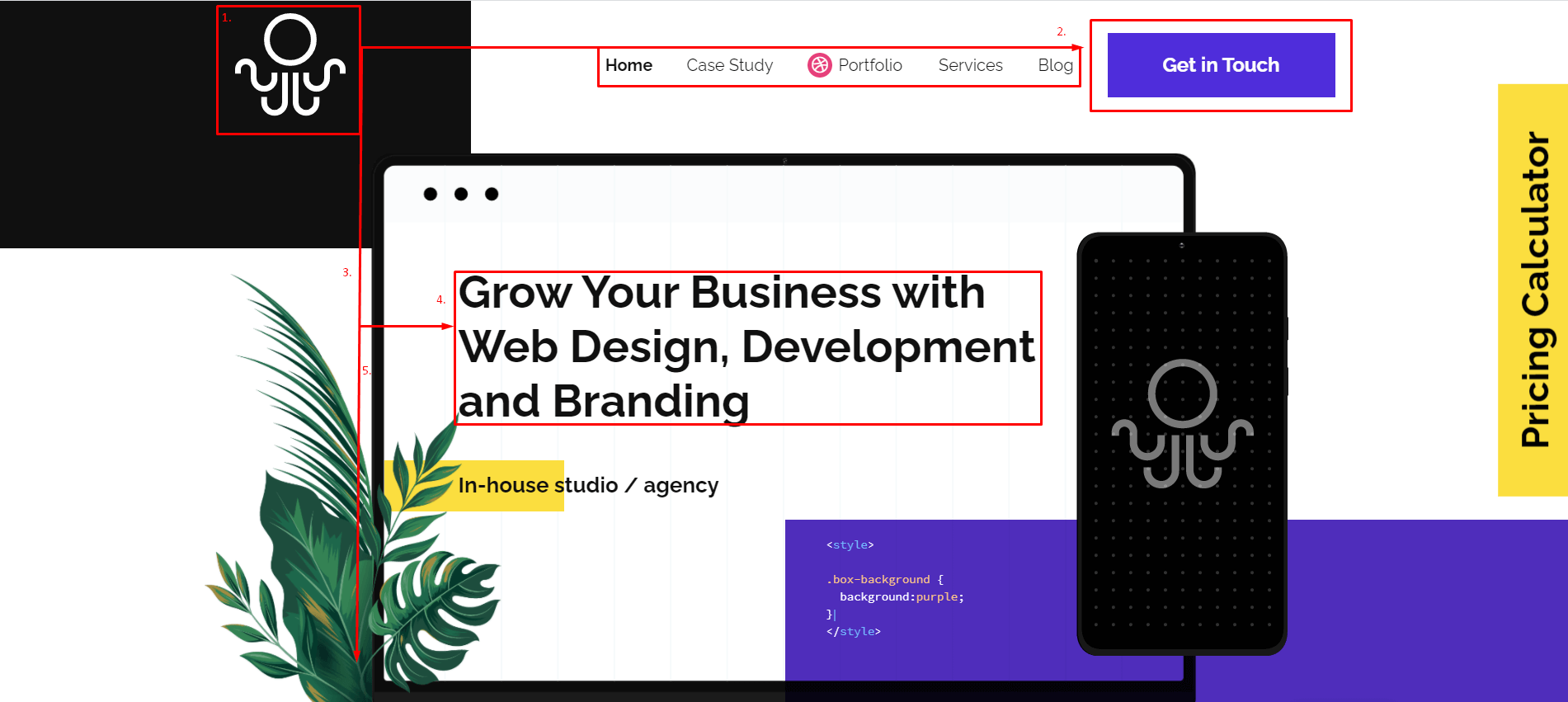
The annotated example above shows visual hierarchy: the eye goes to the logo, then the headline, then the button. Use the same order on your own page, with your most important message largest and your main action in the strongest colour. Our guide to web design principles explains contrast and hierarchy in more detail.
Think about feelings as well as facts. Someone with a broken air conditioner wants it fixed, but they also want to feel calm and looked after. Friendly photos of your team, plain language and clear next steps help.
3. Publish helpful content
Search engines rank pages, not whole websites, so each page should answer a real question. For an HVAC site, good topics include:
- How often should a boiler or furnace be serviced?
- Signs your air conditioner needs repair.
- What size heating or cooling system does my home need?
- What to do if your heating fails in winter.
- How a heat pump works and when it makes sense.
Write for homeowners, in plain language, with practical steps and a clear call to action at the end. A short blog or FAQ section is enough to start. Over time, longer guides and checklists can attract more visitors and show you know your trade. Keep content accurate, and update it when regulations or prices change.
4. Use paid search carefully
Pay-per-click (PPC) advertising shows your ad above the organic results and you pay when someone clicks. It can bring leads quickly, which suits seasonal peaks, and you can target a specific town or service.
It works best when the landing page matches the ad. Send “emergency AC repair” clicks to a page about emergency AC repair, with the phone number and a short form visible. Set a daily budget, track calls and form submissions, and pause keywords that bring clicks without enquiries.
Design for phones and speed
Most urgent searches happen on a phone, so design the mobile version first. Use large tap targets, short forms and a header that keeps the call button in view as people scroll. Compress images, avoid auto-playing video and test the page on a mid-range phone with a normal mobile connection. Google’s guide to Core Web Vitals explains the speed and stability measures worth checking.
Also give seasonal work its own space. A maintenance plan page, a seasonal checklist or a banner for pre-winter servicing gives regular customers a reason to book before something breaks.
HVAC website design checklist
- The headline names your service and your area.
- The phone number is large and tappable on mobile.
- There is one clear primary button on the first screen.
- Each main service has its own page.
- Reviews and certifications are visible.
- The site loads quickly and works well on phones.
- Your Google Business Profile is complete and consistent with the site.
- The contact form works and sends to someone who answers it.
- You can track calls and forms in analytics.
If you work in related trades, our guides to plumbing business websites and electrical business web design cover similar ground, and service business websites gives a wider view. For an older site, start with the website redesign steps.
Frequently asked questions
What should an HVAC website include?
A clear headline, a tappable phone number, a list of services, your service area, reviews and certifications, and a short contact form. Add emergency availability if you offer it.
How can an HVAC company get more calls from its website?
Make the number easy to tap, build a page per service and area, keep your Google Business Profile complete and collect reviews. Paid search can add leads in busy seasons.
Do HVAC companies need a blog?
It is not essential, but helpful articles can bring in visitors who are researching a problem before they call. Even a few good guides help, as long as they are accurate and kept up to date.
How long does HVAC SEO take to work?
It varies by town, competition and the quality of your site. Local improvements such as a complete Google Business Profile can help within weeks, while content and links build over several months.
Should an HVAC website list prices?
Prices vary by job, so many firms show starting prices for standard work such as servicing or a callout fee, and explain that quotes depend on the property. Being open about how pricing works builds trust and cuts down on unqualified enquiries.
Need an HVAC website for a client?
Inkyy is a white label design and development team for agencies. We design and build clear, fast websites for heating and cooling companies that you deliver under your own brand. See our design services, explore our development services or book a 15-minute call.